Corlecti MapStart a map

two ways to look

Watch a map take shape, then open it for yourself.

Each situation below comes twice: the evening somebody built its map of connected blocks, and the map itself. Both open without an account, and neither saves anything you do.

The evening, replayed

The interview asks its own questions, and the answers come back exactly as the person typed them at the time. The map then builds itself in front of you, block by block, in the order the agent wrote them. All of it already happened, so nothing here calls a model.

The map it produced

A real map, published by the person who keeps it. Open it, move around it, read what is on it. Then take it away: one .mmap file, or the same map as a document, a PDF and slides.

situations

Pick the week that looks most like yours.

One person, their own maps, and nobody else in them. Everything here works on the free plan.

A new project, before you build the wrong thing.

A ready interview, Project kickoff, asks its questions first and lays out the answers as branches. On this map, each thing you don't know yet connects to the stage or task that answers it. As you build, Claude Code marks each stage's progress, with a key narrowed to this map and nothing else.

The map
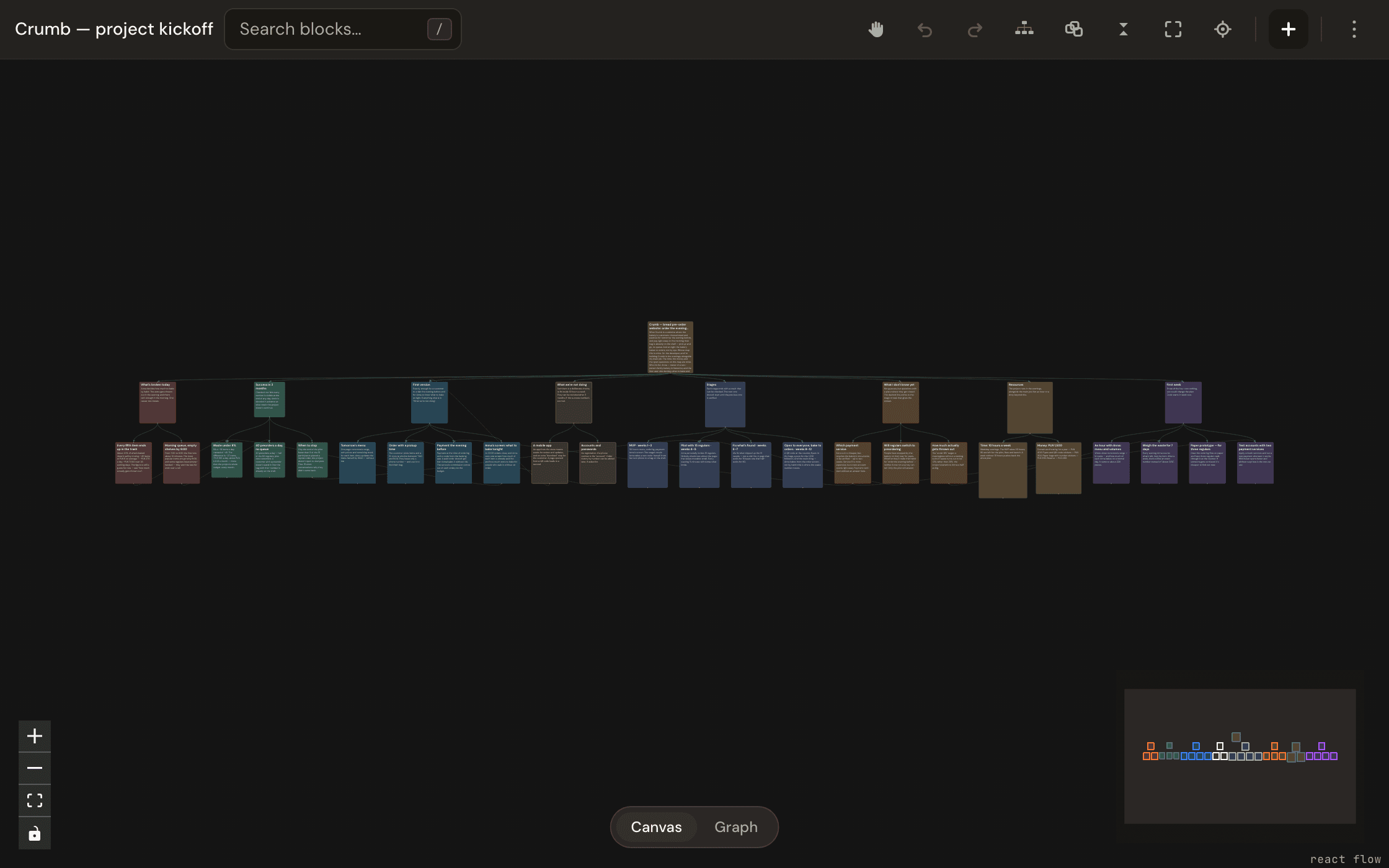
The kickoff map: a branch for each part of the plan, and connections from each unknown to what answers it.
Open the kickoff map

The replay

Pending: useCases.scenarios.developer.replay

Its four files

Pending: useCases.scenarios.developer.files
You've read about cars for years. Where did it all go?

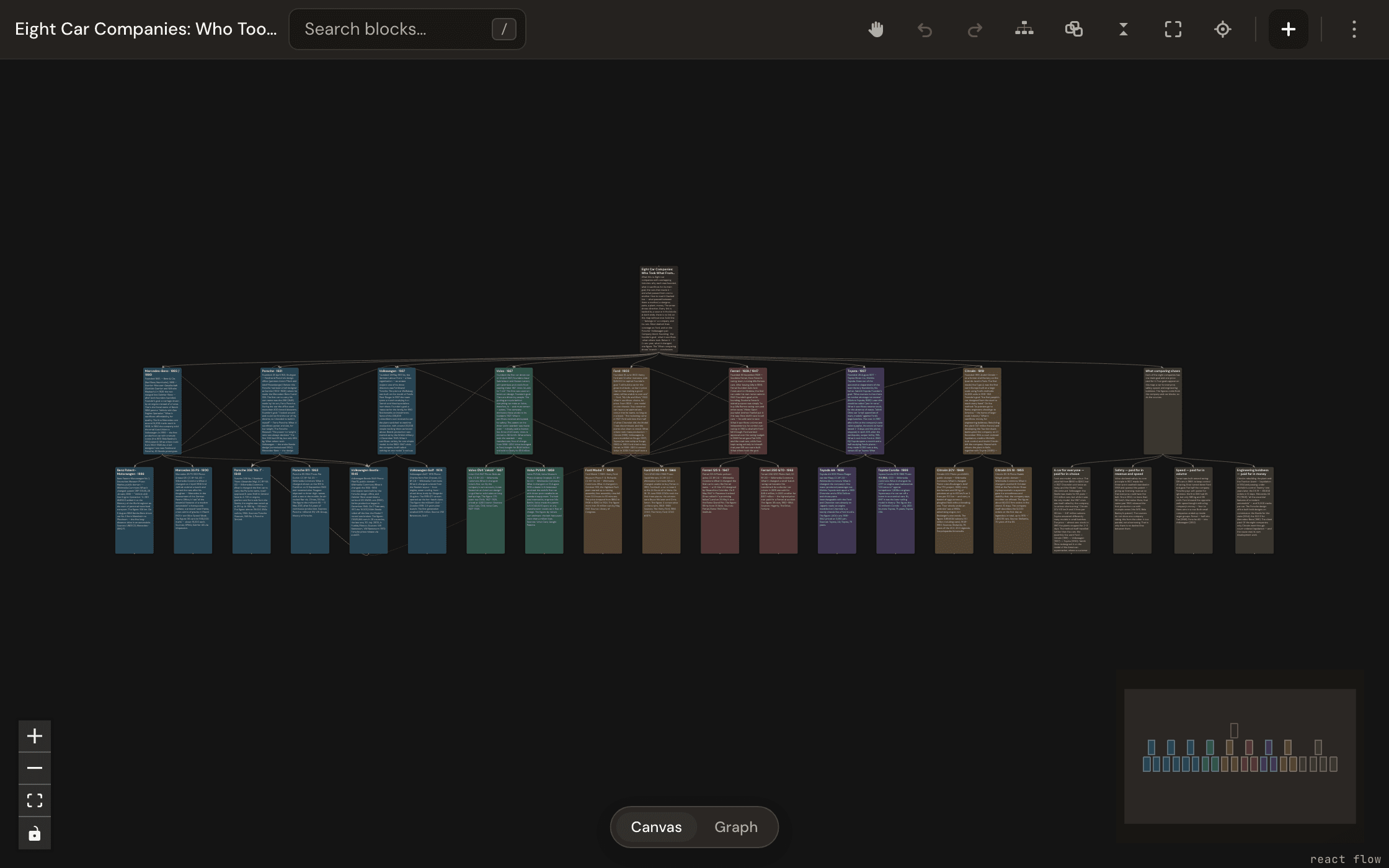
The import takes a web page whole and lays it out as blocks. On this map, connections between eight car companies show what passed from one to another: a designer, parts, a plant. Open a block, and its Nearby section lists what is close to it in meaning, on any of your maps.

The map

The car companies map: a branch per maker, its landmark models below, and connections for what one took from another.
Open the car companies map

The replay

Pending: useCases.scenarios.researcher.replay

Its four files

Pending: useCases.scenarios.researcher.files

A year of entries, and no idea what they add up to.

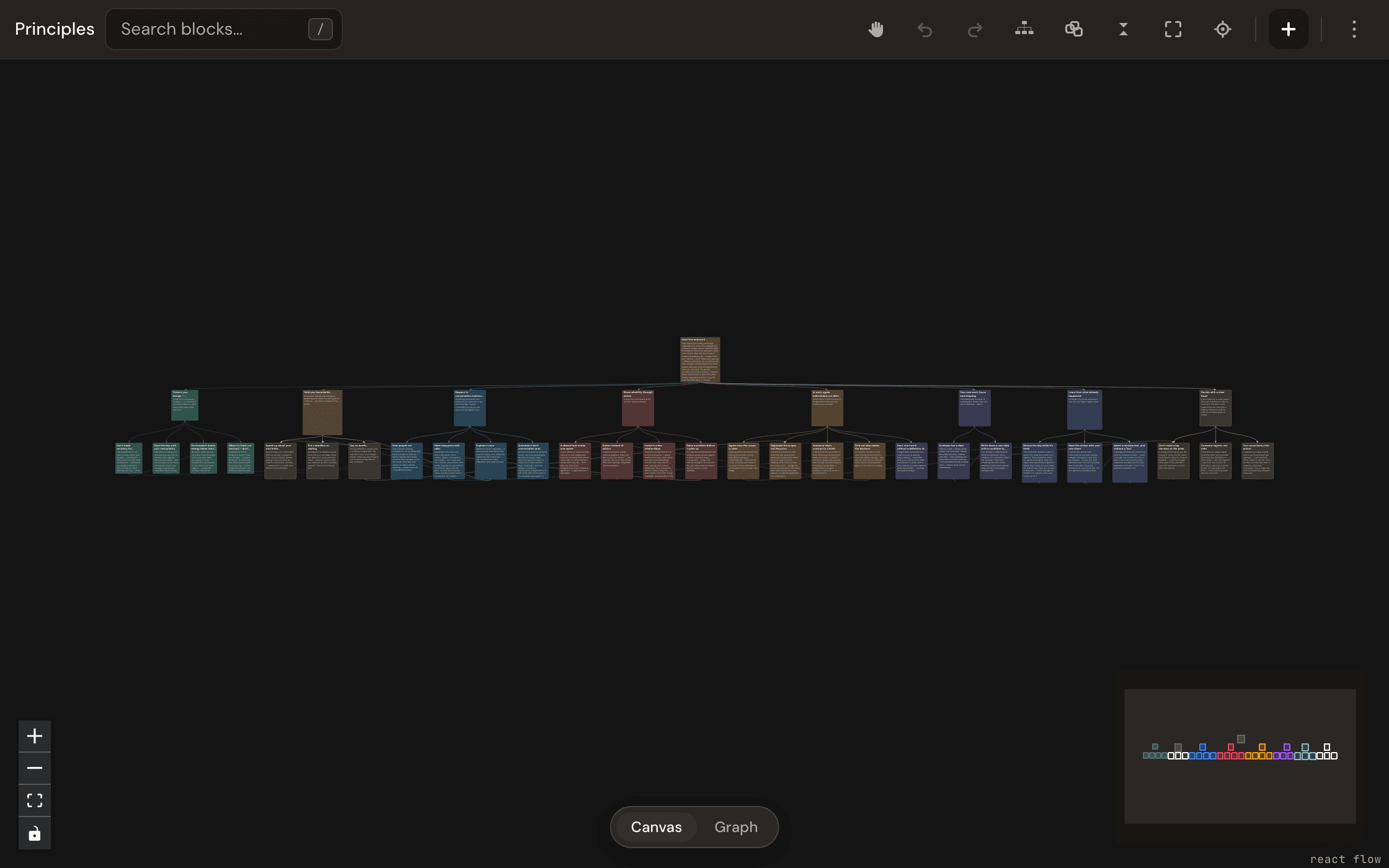
An interview asks, you answer as much as you feel like, and the map's chat files the answers into branches. The map keeps the conclusions: a branch per principle, and under each, rules for when to do what.

The map

The Principles map: eight principles as branches of one root, and short rules under each.
Open the Principles map

The replay

Pending: useCases.scenarios.diary.replay

Its four files

Pending: useCases.scenarios.diary.files
Pending: useCases.scenarios.individual.egg

You take one of these maps by downloading it and importing it into a map of your own. The .mmap file carries the blocks, the connections and the layout, and importing works on the free plan. Whatever you change after that is yours.

in practice

The first evening, and the week after it.

Two questions everybody asks before starting: what happens tonight, and what happens once the novelty has gone. Tonight needs nothing but a browser. What changes as the months go by is how little of the sorting you do by hand.

Tonight

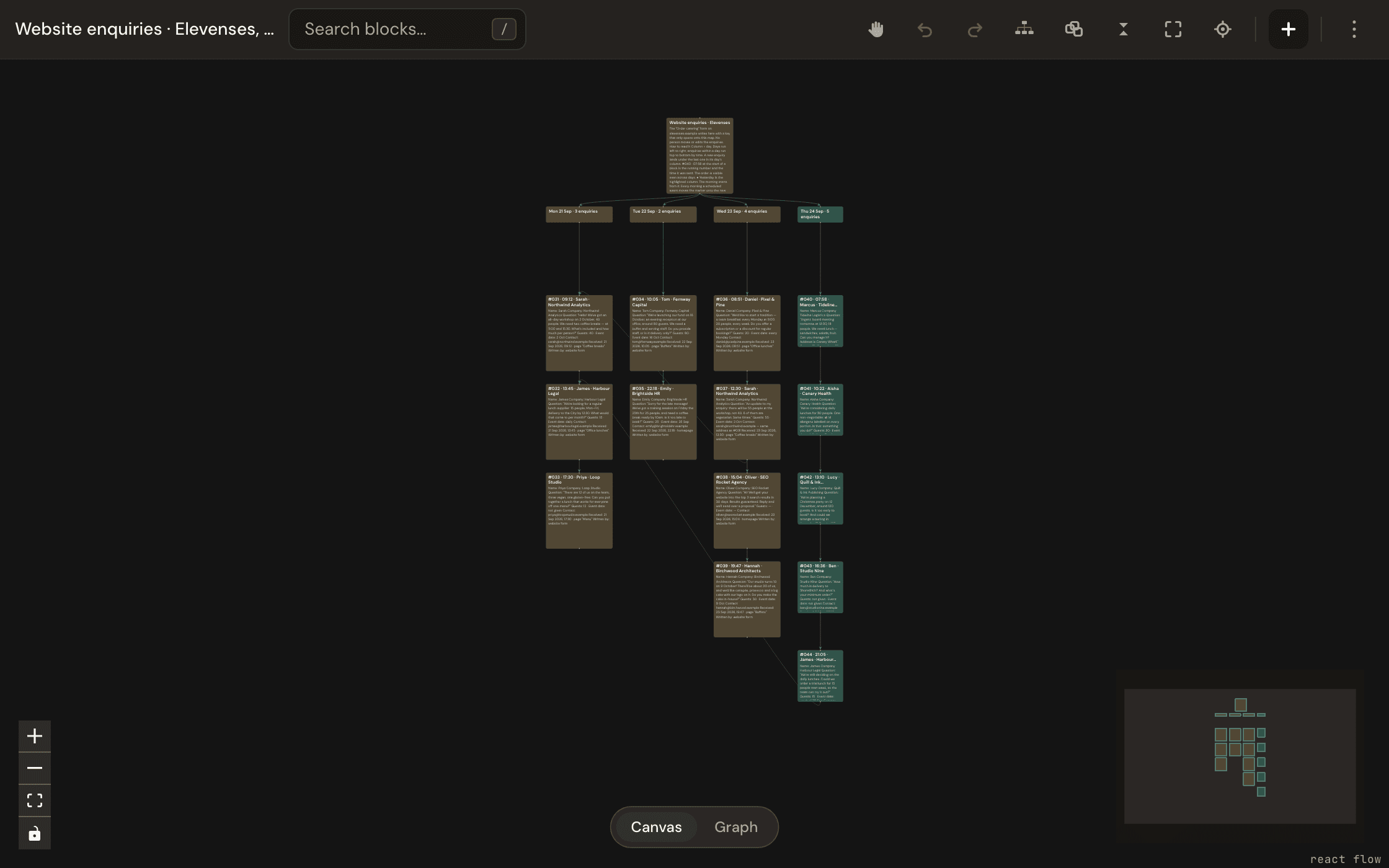
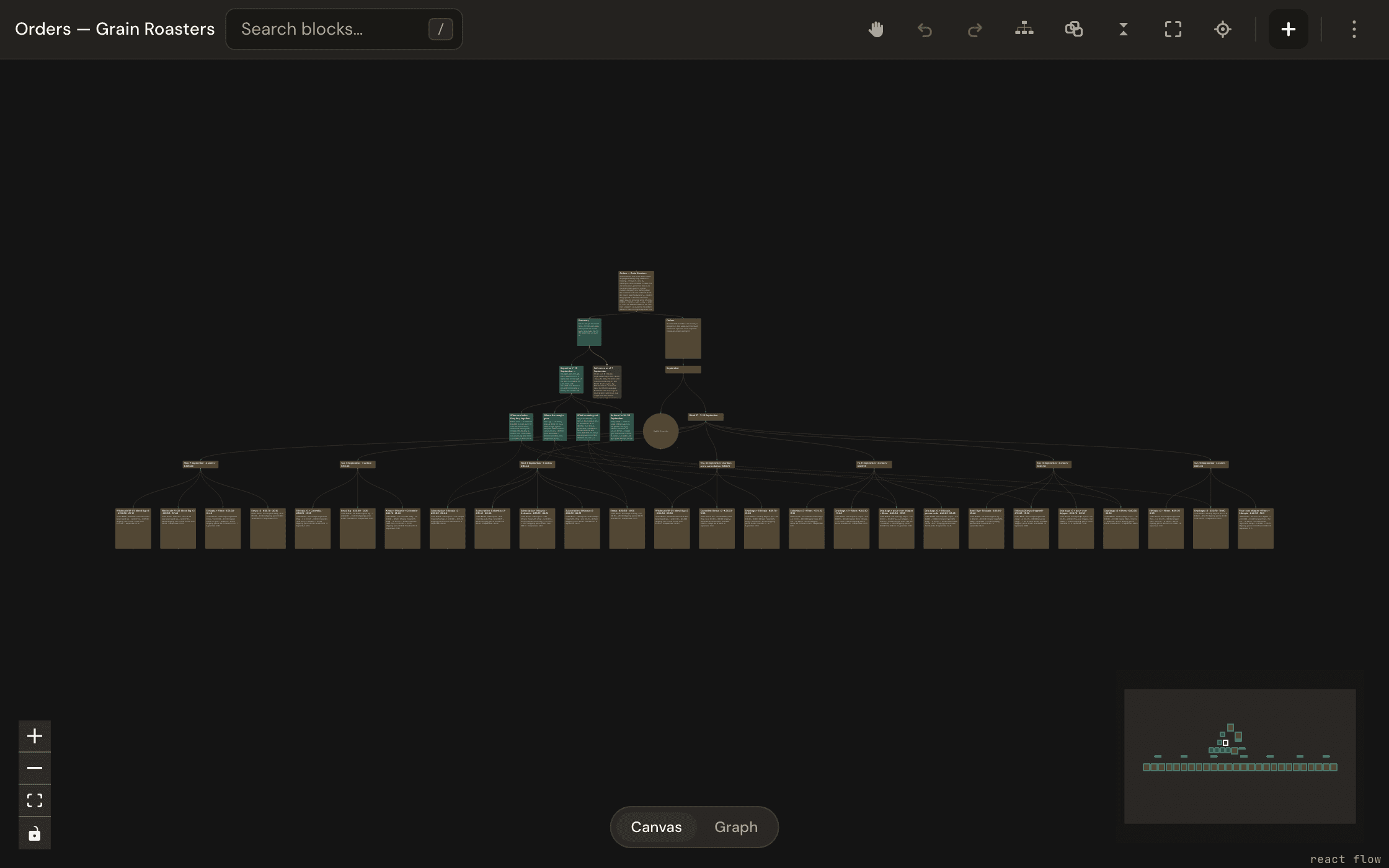
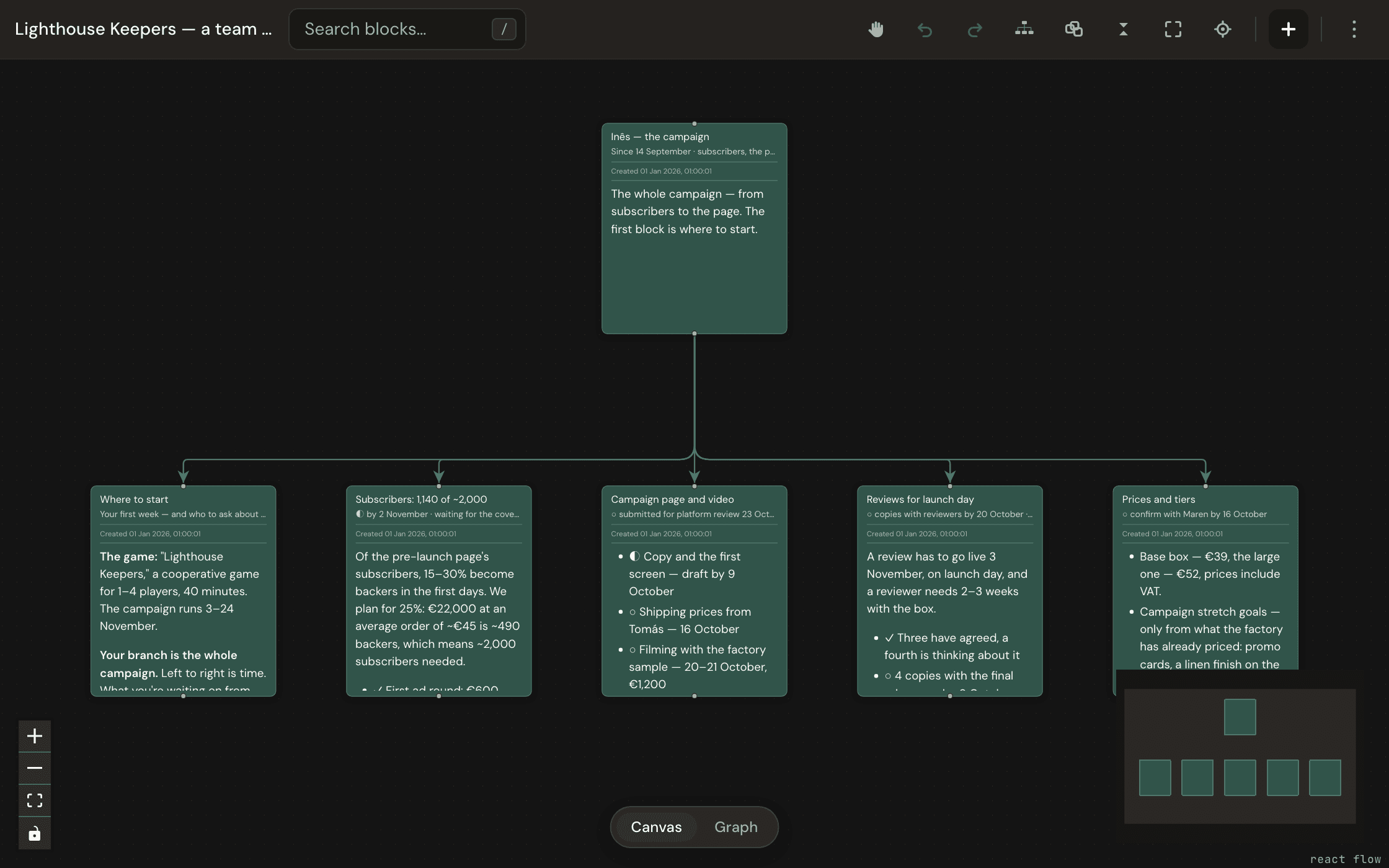
Sign in with your Corlecti ID, and open an empty map. Put in three thoughts, a link, the PDF you meant to read. Then ask the map's chat to build, and it lays them out as blocks with the connections between them.

And the week after

A thought goes to the Telegram bot the moment you have it, typed or spoken. You sort nothing then, and one pass with the agent in the evening lays out what piled up. On Friday the graph lens shows the same map as connections: where it is dense, and what stands alone.

Start with an empty map.

Every map above began from nothing, on the free plan. Pick a situation, or bring your own.